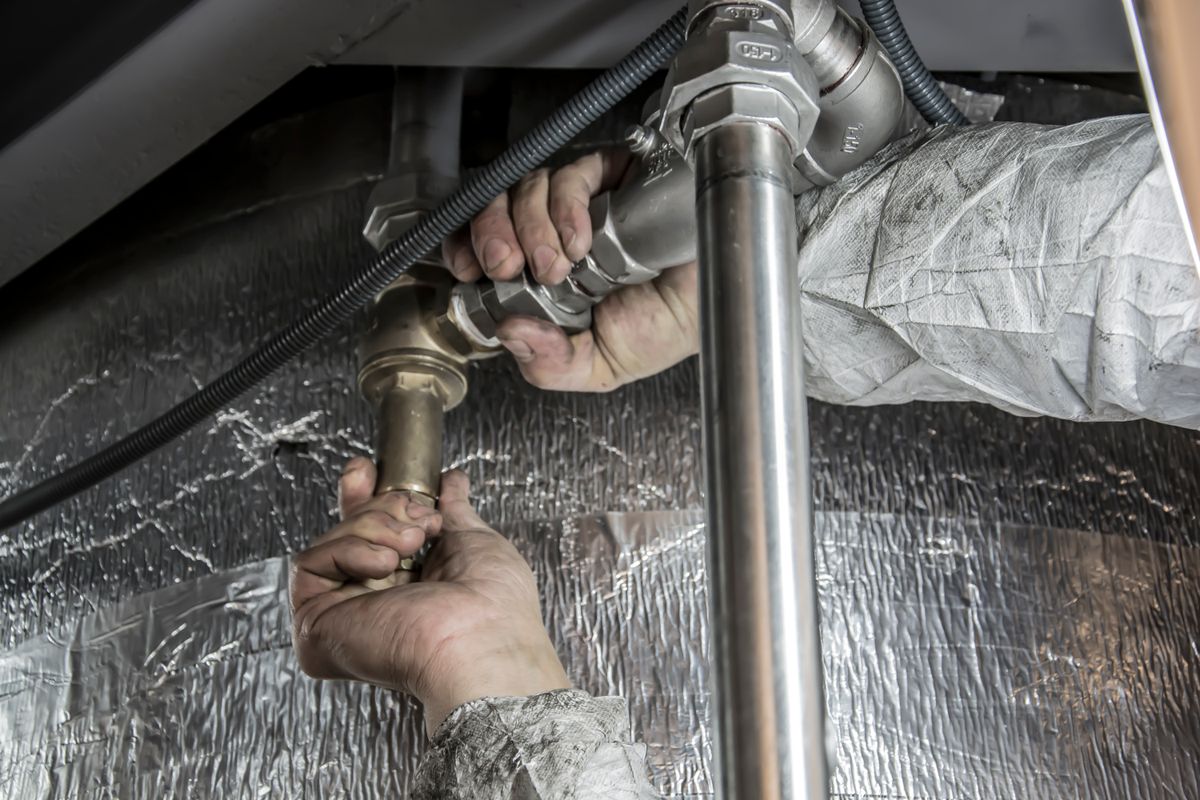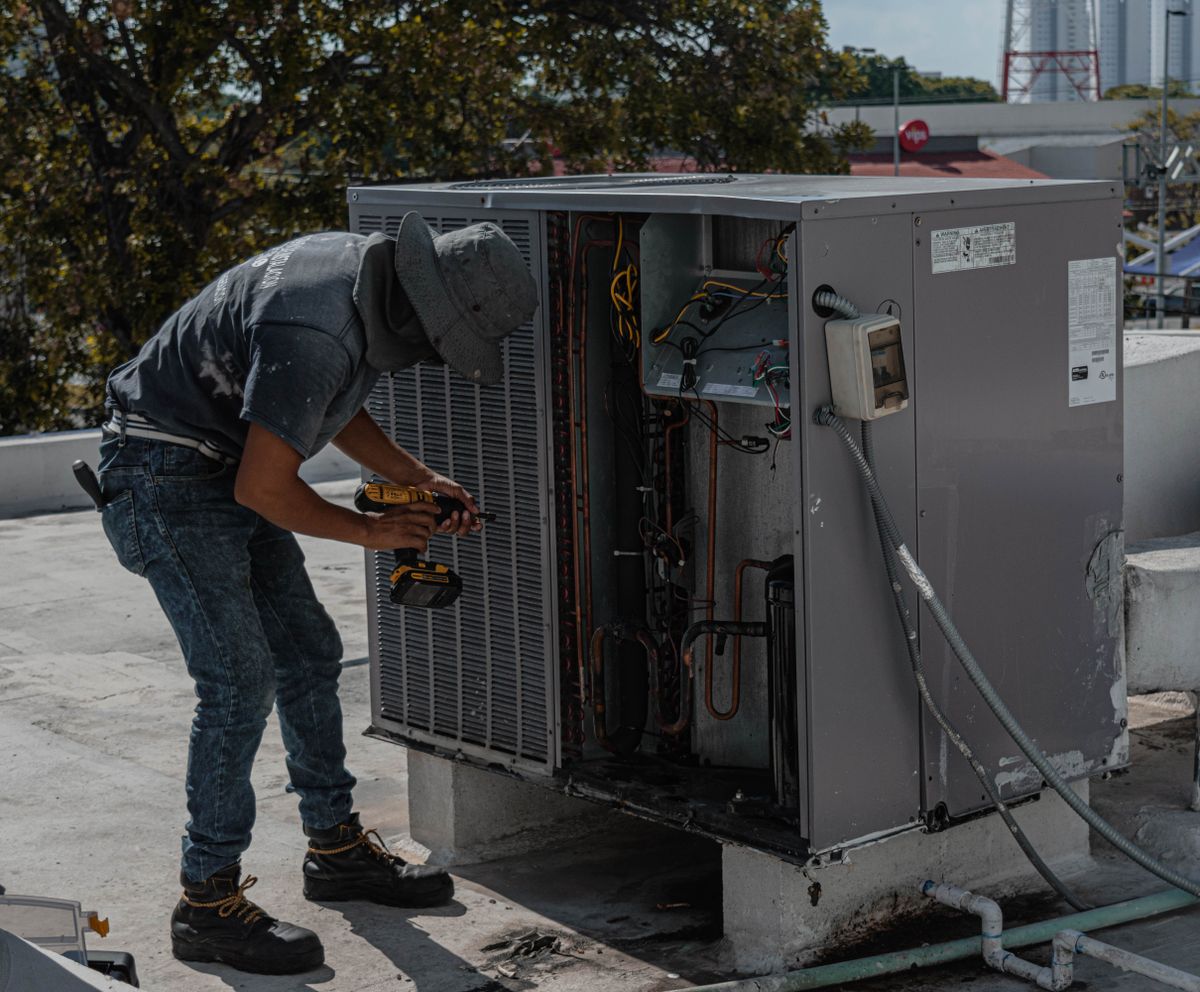
An HVAC answering service exists for one reason: when a homeowner's AC dies in July or a furnace fails in January, they call the first company that picks up. If your techs are on a roof or your dispatcher is buried in ServiceTitan, that emergency call goes to voicemail and then to a competitor. The gap between a ringing phone and a booked job is where most HVAC companies quietly lose tens of thousands of dollars a year.
Most HVAC owners already know missed calls cost jobs. What they underestimate is how many of those calls happen after hours, on weekends, and during peak season when every tech is already booked. An answering service built for HVAC is not a generic call center. It is coverage trained on your service area, your emergency vs. maintenance triage, and your booking rules. The difference between someone who takes a message and someone who books the job on the spot is the difference between revenue captured and revenue lost.
Business owners searching for an HVAC answering service, after-hours HVAC answering service, or 24/7 HVAC call answering are usually past the curiosity stage. They are losing revenue right now and want a fix that books jobs, not just takes messages. This guide covers what a strong HVAC answering service should do, how it compares to hiring another CSR, what to watch out for, and how to roll it out without disrupting your team.
The real cost of missed HVAC calls
Consider the math on a single missed emergency call. If your average emergency ticket runs several hundred dollars and that customer would have joined a maintenance plan worth a few hundred more per year, one missed call can easily represent over a thousand dollars in lifetime value. Now multiply that by even a few missed calls a week during peak season, and the annual cost becomes staggering.
The painful part is you are paying twice: once for the marketing that made the phone ring, and again in the lost lifetime value of a customer who called a competitor instead. Google Ads, truck wraps, and LSA placements do not come cheap. When those investments generate a call and nobody picks up, the spend is effectively wasted. The competitor who answered gets the customer and the review.
There is also a reputation cost. Homeowners who call during an emergency and reach voicemail assume the company is disorganized or too small to handle their problem. That perception sticks, even if you call back an hour later. In HVAC, responsiveness is the first proof of reliability, and reliability is the entire sales pitch.
What an HVAC answering service should actually cover
Not all answering services are equal. A generic call center that answers in a neutral tone, takes a name and number, and emails you a message is barely better than voicemail. An HVAC answering service built for the trades should feel like an extension of your team.
- Live answer during peak hours, evenings, weekends, and holidays in your company name
- Emergency vs. routine triage using your specific criteria (no heat, refrigerant leak, gas smell vs. filter replacement or thermostat question)
- Same-day and next-day booking directly in your scheduling tool, whether that is ServiceTitan, Housecall Pro, Jobber, or another platform
- Membership and maintenance plan upsell prompts when the call context is appropriate
- SMS confirmation to the homeowner so they do not double-book a competitor while waiting
- Dispatch coordination with your on-call tech for true emergencies, including address and issue details
- Call logging and tagging so your office sees every interaction the next morning
What good HVAC call coverage looks like vs. message-taking
Message-taking is a floor, not a goal. A good answering partner should sound like your office on a great day. The caller hears your company name, gets asked the right qualifying questions, and hangs up with a confirmed appointment or a clear next step. The experience should be indistinguishable from your best in-house CSR.
Compare that to a generic service where the caller hears a bland greeting, gives their name and number, and is told someone will call back. In an HVAC emergency, 'someone will call back' is the same as 'call the next company.' The homeowner does not wait. They call until someone books them.
Good coverage also means the answering team knows your service area. If a caller is outside your territory, they should redirect politely rather than booking a job your techs cannot reach. Likewise, they should know your pricing guardrails well enough to set expectations without quoting exact numbers you have not approved.
HVAC answering service vs. hiring another CSR
A second in-house CSR helps during the day, but it rarely solves nights, weekends, and seasonal spikes. Payroll, benefits, training, PTO, and ramp time make a local hire expensive for coverage that may only be critical a few months a year. If your peak season runs from May through September, you are paying that salary year-round for a problem that is most acute for five months.
An HVAC answering service, or a dedicated plug-in support seat, scales with call volume. You keep brand voice and booking control while someone else owns the phone when your team cannot. During slow months, you pay for the coverage you use. During peak season, additional capacity is already trained and ready.
There is also a reliability advantage. A single CSR takes sick days, goes on vacation, and eventually quits. A managed answering partner has built-in redundancy. Coverage does not depend on one person showing up to work.
Implementation playbook: rolling out HVAC call coverage
Start with after-hours and overflow, not every call on day one. This lets you test the service in a lower-stakes environment before routing primary daytime calls. Document the following before your partner takes a single call.
Run a two-week parallel period where your team monitors call quality alongside the answering service. Review recordings or logs daily during this window. Adjust scripts and triage rules based on real calls, not hypothetical scenarios.
- Emergency definitions: what qualifies for immediate dispatch vs. next-day booking
- Service area ZIP codes and any exclusions
- Pricing ranges you allow on the phone (e.g., dispatch fee, diagnostic fee, or 'we will provide a quote on-site')
- On-call tech rotation and escalation contacts
- Scheduling tool login and booking rules (time windows, job types, tech assignments)
- Membership plan talking points and when to mention them
Common mistakes when choosing an HVAC answering service
The most common mistake is choosing the cheapest per-minute plan and accepting generic scripts. Low-cost services often rotate agents across hundreds of accounts, so your caller gets someone who has never heard of your company and cannot pronounce your business name. The result is a bad first impression that costs more than the money you saved.
Another failure mode is skipping the triage setup. If everything is treated as an emergency, your on-call tech gets woken up for a thermostat question at 11 p.m. and stops answering the dispatch line. If nothing is treated as an emergency, real crises go to voicemail overnight. Clear triage rules protect both your team and your customers.
Finally, some owners outsource call answering but never review the data. If you are not tracking answered rate, booked jobs from calls, and customer satisfaction, you have no way to know whether the service is working or quietly losing you business.
Tools and systems your answering partner should work inside
The best results happen when your answering service works in the same stack you already use. ServiceTitan, Housecall Pro, Jobber, FieldEdge, and GorillaDesk all support scheduling by trained operators. Your partner should log calls, book appointments, and update customer records in your system, not in a separate spreadsheet you have to reconcile later.
SMS tools matter too. A confirmation text sent immediately after booking reduces double-booking and gives the homeowner peace of mind. If your answering partner can trigger that text from your system, the customer experience is seamless.
How to measure success in the first 30-60 days
Track three numbers from day one: answered rate, jobs booked from phone, and average speed of answer. Answered rate tells you whether calls are actually getting picked up. Jobs booked tells you whether those answered calls convert. Average speed of answer tells you whether customers are waiting too long and hanging up before someone picks up.
After 30 days, compare these numbers to your baseline before the answering service started. If your answered rate improved, your booked jobs from inbound calls increased, and your speed of answer dropped, the service is paying for itself. If those numbers did not move, investigate whether the issue is call volume, script quality, or booking permissions.
By day 60, you should have enough data to decide whether to expand coverage to daytime overflow, Saturday mornings, or other windows where calls spike.
What if my customers want to talk to me personally?
This is the most common objection, and it is worth addressing directly. Your best customers do want your expertise, but they want it on the job site, not on the phone taking down an address. An answering service does not replace you. It protects your time so you can focus on the work that actually requires your license and experience.
Most homeowners care about one thing when they call: that someone competent picks up, understands their problem, and gets them on the schedule. They do not need to hear the owner's voice to feel confident. They need a professional, knowledgeable answer and a confirmed appointment.
Will callers know they are not talking to my office?
A well-trained answering partner should be indistinguishable from your in-house team. They answer with your company name, follow your script, and use the same language your CSRs would. The only difference is that calls do not go to voicemail at 8 p.m. or during your busiest install day.
If the service sounds like a generic call center, that is a sign of poor training or a high-volume shared model. Dedicated or semi-dedicated answering partners invest the time to learn your business, your service area, and your tone. That investment shows on every call.
How Northlane helps
Northlane provides HVAC-ready customer operations support: live call answering, scheduling, SMS follow-up, and after-hours coverage so emergency calls become booked jobs instead of voicemail. Our team works inside your scheduling tools and follows your triage rules, so every call feels like it was answered by your office.
If you are comparing HVAC answering services and want dedicated capacity trained on your scripts, service area, and booking workflow, we can plug in without forcing you into a shared call-center queue. Coverage scales with your season, and you keep full control over dispatch rules and brand voice.
Want this handled for you?
Northlane gives home service businesses dedicated operations support so the work gets done without adding headcount.